4
previous arrow
next arrow
6
previous arrow
next arrow

Permanent Exhibition of Architecture of Evolution

The idea for establishing the Architecture of Evolution Group was first proposed in 1983. The first official meeting was held in May 1984 with the participation of five architecture students from the Faculty of Fine Arts at the University of Tehran. The group’s initial objective was to conduct research on contemporary Iranian architecture, collect archival documents and records, and develop a framework for the stylistic analysis and periodization of architectural works at a time when published resources in this field were extremely limited. For this reason, the group’s early studies focused on the architecture of Iran in both the pre-Islamic and Islamic periods, providing a broader historical foundation for understanding contemporary architecture. As the group’s activities expanded throughout the 1980s, its research moved beyond purely historical inquiry toward a more comprehensive examination of the evolution of Iranian architecture over the previous century, as well as the social and cultural forces that had shaped it. This shift in approach made it possible to identify key turning points in contemporary Iranian architecture and to better understand its relationship with broader social and political transformations.
From 1996 onward, following the establishment of the group’s three-member core structure, its activities continued with the participation of a growing number of researchers, accelerating the process of collecting and documenting archival materials.
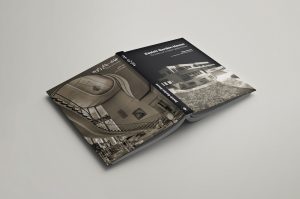
At the same time, a systematic effort was initiated to identify and record information on influential architects, both Iranian and international, a project that continues to this day. The group’s commitment to a deeper understanding of the historical and social foundations of contemporary architecture led its research toward a period in which Iran became increasingly connected to the industrialized world and Europe. International exhibitions, the establishment of modern educational institutions, and broader structural changes within society were among the defining features of this era. These developments contributed to the physical expansion of cities, the demolition of historic city walls, and the emergence of new urban structures. Within this context, a growing belief emerged that traditional architecture could no longer adequately respond to the demands of a changing society. As a result, architects and policymakers increasingly looked to European experience and to architects educated abroad in search of new approaches, giving rise to a new architectural language in design.The outcome of this research trajectory was the publication of the group’s first book, Nikolai Markov, in 2003. It was followed by six further volumes dedicated to pioneers of Iranian architecture: Karim Taherzadeh Behzad, Vartan Hovanesian, André Godard, Paul Abkar, Roland Dubrulle, and Maxime Siroux. These publications form part of the group’s broader effort to systematically reexamine the relationship between historical, social, and intellectual transformations and the production of contemporary architecture in Iran. Through this work, the group seeks to redefine the place of Iranian contemporary architecture within both regional and global architectural currents.
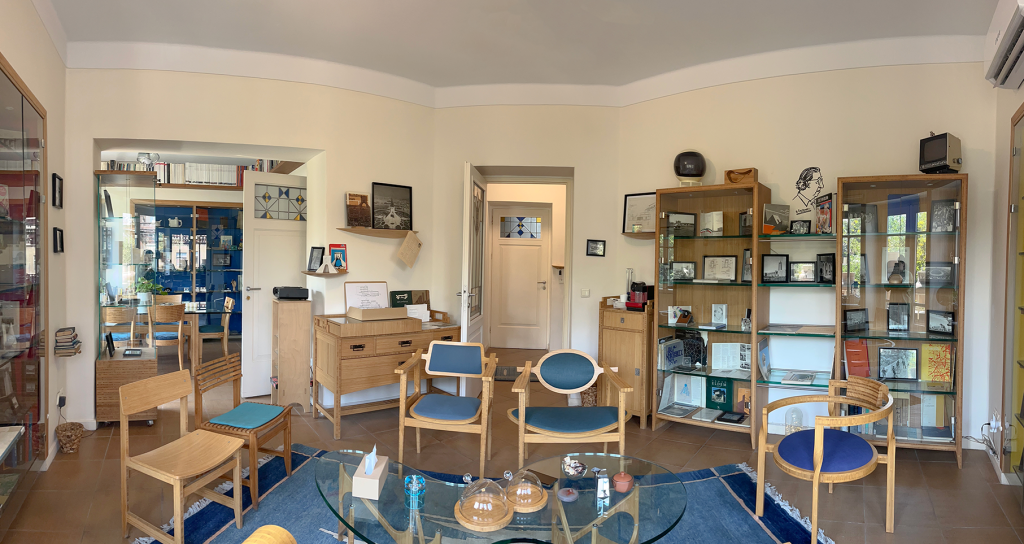
Alongside its publications and editorial work, over the past four decades the group has assembled an extensive archive of documents related to Iranian and global architecture. On the occasion of the group’s fortieth anniversary, this collection was introduced as the Architecture of Evolution Exhibition, a permanent space designed to foster direct engagement with researchers, students, and architecture enthusiasts. Within this showcase, documents, photographs, drawings, and written sources collected and preserved over more than forty years are presented to the public. Together, they form a valuable repository that supports the study and understanding of contemporary Iranian architecture, serving as a key resource for research and critical inquiry.
Permanent Exhibition of Architecture of Evolution

The idea for establishing the Architecture of Evolution Group was first proposed in 1983. The first official meeting was held in May 1984 with the participation of five architecture students from the Faculty of Fine Arts at the University of Tehran. The group’s initial objective was to conduct research on contemporary Iranian architecture, collect archival documents and records, and develop a framework for the stylistic analysis and periodization of architectural works at a time when published resources in this field were extremely limited. For this reason, the group’s early studies focused on the architecture of Iran in both the pre-Islamic and Islamic periods, providing a broader historical foundation for understanding contemporary architecture. As the group’s activities expanded throughout the 1980s, its research moved beyond purely historical inquiry toward a more comprehensive examination of the evolution of Iranian architecture over the previous century, as well as the social and cultural forces that had shaped it. 

This shift in approach made it possible to identify key turning points in contemporary Iranian architecture and to better understand its relationship with broader social and political transformations.
From 1996 onward, following the establishment of the group’s three-member core structure, its activities continued with the participation of a growing number of researchers, accelerating the process of collecting and documenting archival materials.
At the same time, a systematic effort was initiated to identify and record information on influential architects, both Iranian and international, a project that continues to this day. The group’s commitment to a deeper understanding of the historical and social foundations of contemporary architecture led its research toward a period in which Iran became increasingly connected to the industrialized world and Europe. International exhibitions, the establishment of modern educational institutions, and broader structural changes within society were among the defining features of this era. These developments contributed to the physical expansion of cities, the demolition of historic city walls, and the emergence of new urban structures. Within this context, a growing belief emerged that traditional architecture could no longer adequately respond to the demands of a changing society. As a result, architects and policymakers increasingly looked to European experience and to architects educated abroad in search of new approaches, giving rise to a new architectural language in design.The outcome of this research trajectory was the publication of the group’s first book, Nikolai Markov, in 2003. It was followed by six further volumes dedicated to pioneers of Iranian architecture: Karim Taherzadeh Behzad, Vartan Hovanesian, André Godard, Paul Abkar, Roland Dubrulle, and Maxime Siroux. These publications form part of the group’s broader effort to systematically reexamine the relationship between historical, social, and intellectual transformations and the production of contemporary architecture in Iran. Through this work, the group seeks to redefine the place of Iranian contemporary architecture within both regional and global architectural currents.
Alongside its publications and editorial work, over the past four decades the group has assembled an extensive archive of documents related to Iranian and global architecture. On the occasion of the group’s fortieth anniversary, this collection was introduced as the Architecture of Evolution Exhibition, a permanent space designed to foster direct engagement with researchers, students, and architecture enthusiasts. Within this showcase, documents, photographs, drawings, and written sources collected and preserved over more than forty years are presented to the public. Together, they form a valuable repository that supports the study and understanding of contemporary Iranian architecture, serving as a key resource for research and critical inquiry.

Permanent Exhibition of Architecture of Evolution

The idea for establishing the Architecture of Evolution Group was first proposed in 1983. The first official meeting was held in May 1984 with the participation of five architecture students from the Faculty of Fine Arts at the University of Tehran. The group’s initial objective was to conduct research on contemporary Iranian architecture, collect archival documents and records, and develop a framework for the stylistic analysis and periodization of architectural works at a time when published resources in this field were extremely limited. For this reason, the group’s early studies focused on the architecture of Iran in both the pre-Islamic and Islamic periods, providing a broader historical foundation for understanding contemporary architecture. As the group’s activities expanded throughout the 1980s, its research moved beyond purely historical inquiry toward a more comprehensive examination of the evolution of Iranian architecture over the previous century, as well as the social and cultural forces that had shaped it. This shift in approach made it possible to identify key turning points in contemporary Iranian architecture and to better understand its relationship with broader social and political transformations.
From 1996 onward, following the establishment of the group’s three-member core structure, its activities continued with the participation of a growing number of researchers, accelerating the process of collecting and documenting archival materials.

At the same time, a systematic effort was initiated to identify and record information on influential architects, both Iranian and international, a project that continues to this day. The group’s commitment to a deeper understanding of the historical and social foundations of contemporary architecture led its research toward a period in which Iran became increasingly connected to the industrialized world and Europe. International exhibitions, the establishment of modern educational institutions, and broader structural changes within society were among the defining features of this era. These developments contributed to the physical expansion of cities, the demolition of historic city walls, and the emergence of new urban structures. Within this context, a growing belief emerged that traditional architecture could no longer adequately respond to the demands of a changing society. As a result, architects and policymakers increasingly looked to European experience and to architects educated abroad in search of new approaches, giving rise to a new architectural language in design.The outcome of this research trajectory was the publication of the group’s first book, Nikolai Markov, in 2003. It was followed by six further volumes dedicated to pioneers of Iranian architecture: Karim Taherzadeh Behzad, Vartan Hovanesian, André Godard, Paul Abkar, Roland Dubrulle, and Maxime Siroux. These publications form part of the group’s broader effort to systematically reexamine the relationship between historical, social, and intellectual transformations and the production of contemporary architecture in Iran. Through this work, the group seeks to redefine the place of Iranian contemporary architecture within both regional and global architectural currents.
Alongside its publications and editorial work, over the past four decades the group has assembled an extensive archive of documents related to Iranian and global architecture. On the occasion of the group’s fortieth anniversary, this collection was introduced as the Architecture of Evolution Exhibition, a permanent space designed to foster direct engagement with researchers, students, and architecture enthusiasts. Within this showcase, documents, photographs, drawings, and written sources collected and preserved over more than forty years are presented to the public. Together, they form a valuable repository that supports the study and understanding of contemporary Iranian architecture, serving as a key resource for research and critical inquiry.

Book Purchase

Register

Cooperation

News

Scroll to Top